
Concrete Driveways in Denver: Costs, Permits & What to Expect
Denver is a city of driveways. From the older ranches in Wheat Ridge and Harvey Park to the newer builds in Stapleton and Green Valley Ranch, driveways are a constant home improvement project — whether it’s replacing cracked asphalt, upgrading from gravel, or adding a new driveway to a property that didn’t have one.
If you’re planning a concrete driveway in Denver, here’s an honest guide to costs, permits, and what the process actually looks like.
What Does a Concrete Driveway Cost in Denver in 2025?
In 2025, a standard concrete driveway in Denver typically runs $9–$14 per square foot installed. Denver sits at the higher end of Front Range pricing, driven by higher labor costs, permit fees, and strong demand.
Rough estimates by driveway size:
- Single car (200–250 sq ft): $1,800–$3,500
- Two-car (400–600 sq ft): $3,600–$8,400
- Three-car or extended (800+ sq ft): $7,200–$12,000+
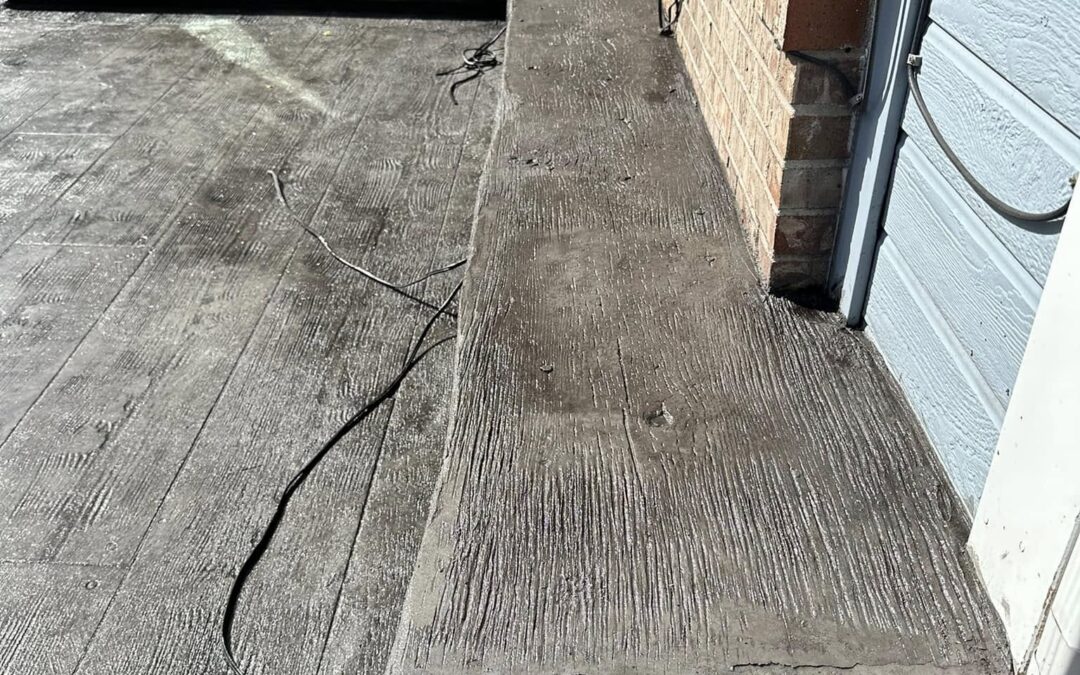
Decorative finishes — stamped concrete, integral color, exposed aggregate — add $4–$10 per square foot on top of base pricing. Demolition and removal of an existing driveway adds $1–$3 per square foot.
Denver Permits: What You Actually Need
Denver requires a permit for most residential concrete driveway projects. Specifically:
- New driveway installations almost always require a permit
- Full replacements generally require a permit
- Partial repairs (patching sections) may not require a permit depending on scope
Denver also has specific rules about where a driveway can be located relative to alleys, property lines, and street intersections. If your driveway accesses a city street, you may need a separate Right-of-Way (ROW) permit from Denver Public Works for the curb cut.
Permit costs in Denver for a typical residential driveway range from $200–$600 depending on the project scope. A reputable concrete contractor will pull permits as part of the job — ask about this upfront.
The Process, Step by Step
Step 1 — Site visit and quote. A contractor walks the property, measures the driveway area, assesses site conditions (soil, drainage, existing surfaces), and provides a written quote. Good contractors give detailed quotes that break out labor, materials, demolition, and any additional work.
Step 2 — Permit pulling. The contractor applies for permits with Denver Community Planning and Development (CPD). This typically takes 1–2 weeks for residential projects, sometimes longer during peak permit season.
Step 3 — Utility marking. Call 811 before any excavation. The city marks underground utilities within a few business days.
Step 4 — Demo and prep. Existing driveway (if any) is demolished and hauled away. Subgrade is excavated, graded, and compacted. Forms are set. Gravel base is installed.
Step 5 — Pour. Concrete is poured, finished, and jointed. In summer, early morning starts are common to avoid afternoon heat. In cooler weather, curing blankets may be used.
Step 6 — Cure. 24–48 hours before foot traffic, 7–10 days before vehicles. Your contractor should communicate this clearly.
Step 7 — Inspection. Denver may require an inspection before and/or after the pour depending on the permit type. Your contractor handles scheduling this.
What to Watch Out For
- No permit mention: Any contractor who says permits aren’t necessary for a new driveway in Denver is either misinformed or cutting corners. Unpermitted work creates problems at resale.
- No written quote: Always get a written, itemized quote.
- Skipping subbase: Ask directly whether they’re using a compacted gravel base. Denver’s expansive soils in many neighborhoods demand it.
JXB Concrete handles driveway projects throughout Denver and the surrounding metro, including Aurora, Centennial, and Commerce City. We pull permits, we don’t skip subbase, and we give written quotes.
Ready for a free quote? Contact JXB Concrete — serving Denver, Aurora, Centennial, Commerce City, and neighborhoods throughout the greater Denver area.