
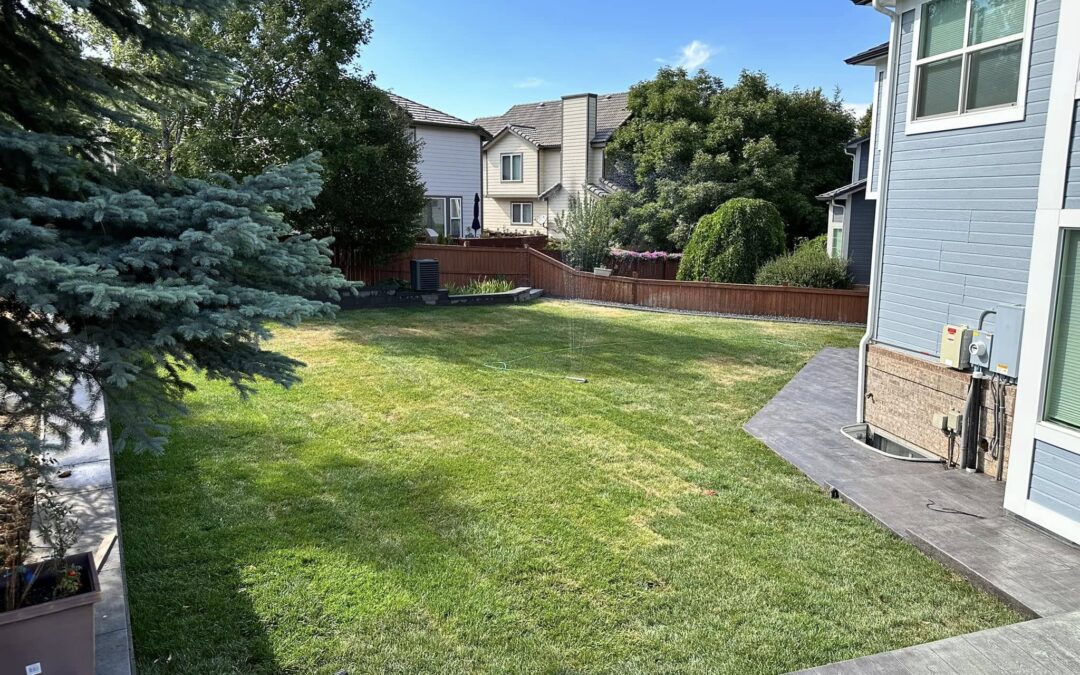
Concrete Driveways in Colorado Springs: What You Need to Know
Colorado Springs is a great place to invest in a concrete driveway. The area’s climate is dry, which is good for concrete longevity — but the soil conditions and temperature swings create specific challenges you need to account for. Here’s what homeowners in the Springs should know before they pour.
Colorado Springs Soil: The Palmer Divide Factor
Much of the Colorado Springs area sits on or near the Palmer Divide, and the soils here are no joke. You’ve got a mix of sandy soils in some neighborhoods, expansive clay in others, and rocky substrate in many hillside areas.
Expansive clay is the biggest concern for concrete. It absorbs moisture and swells, then dries out and shrinks. Over time, that cycle can heave a driveway slab significantly — especially if drainage around the driveway isn’t properly managed.
A qualified concrete contractor in the Springs will:
- Test or visually assess the subgrade before forming
- Excavate and replace problem soil with compacted road base
- Install a proper gravel subbase (minimum 4 inches)
- Grade the driveway for positive drainage away from the house
Don’t skip this. Subgrade prep is boring and invisible once the concrete is poured, but it’s what keeps your driveway looking good for decades.
Freeze-Thaw in Colorado Springs
Colorado Springs sits at about 6,000 feet and gets cold — not mountain cold, but cold enough for serious freeze-thaw action. The Springs averages around 160 freeze-thaw cycles per year, which is hard on concrete surfaces, especially if the mix or curing wasn’t done right.
To handle freeze-thaw well, your concrete should:
- Be a minimum 4,000 PSI mix (air-entrained concrete is ideal)
- Be poured at the right temperature — not below 40°F without cold-weather protection measures
- Be properly cured before it gets hit by frost
- Be sealed with a penetrating sealer to limit moisture infiltration
Air-entrained concrete has tiny bubbles built into the mix that give water room to expand when it freezes, dramatically reducing surface scaling and cracking. In Colorado Springs, it’s not optional — it’s standard practice for any outdoor flatwork.
De-Icing Salt: Use It Carefully
Sodium chloride (rock salt) is the cheapest de-icer, but it’s also the harshest on concrete. It accelerates freeze-thaw damage and causes surface scaling, especially on concrete that’s less than one year old.
For the first winter after a new pour, avoid salt entirely. Use sand for traction instead. After the first year, you can use salt sparingly — but calcium chloride or magnesium chloride are gentler alternatives that do the job at lower temperatures.
Driveway Thickness Matters More Than People Realize
Standard residential driveways are poured at 4 inches. That’s adequate for passenger cars. But if you park heavy trucks, RVs, or construction equipment on your driveway, you want 5–6 inches minimum. The cost difference is modest — thicker concrete on an existing job adds maybe 10–15% to material costs — but the structural improvement is significant.
What Does a Concrete Driveway Cost in Colorado Springs?
In 2025, a standard concrete driveway in Colorado Springs typically runs $7–$11 per square foot installed, depending on size, site conditions, and finish. A two-car driveway (roughly 500–600 sq ft) usually runs $3,500–$6,500. Stamped or colored finishes push that higher.
Serving the Broader Colorado Springs Area
JXB Concrete works throughout Colorado Springs and the surrounding communities, including Fountain, Monument, and Pueblo. We know the local soil conditions, permit requirements, and what Colorado’s climate demands from a concrete installation.
Ready for a free quote? Contact JXB Concrete — serving Colorado Springs, Fountain, Monument, Pueblo, and surrounding communities in southern Colorado.