
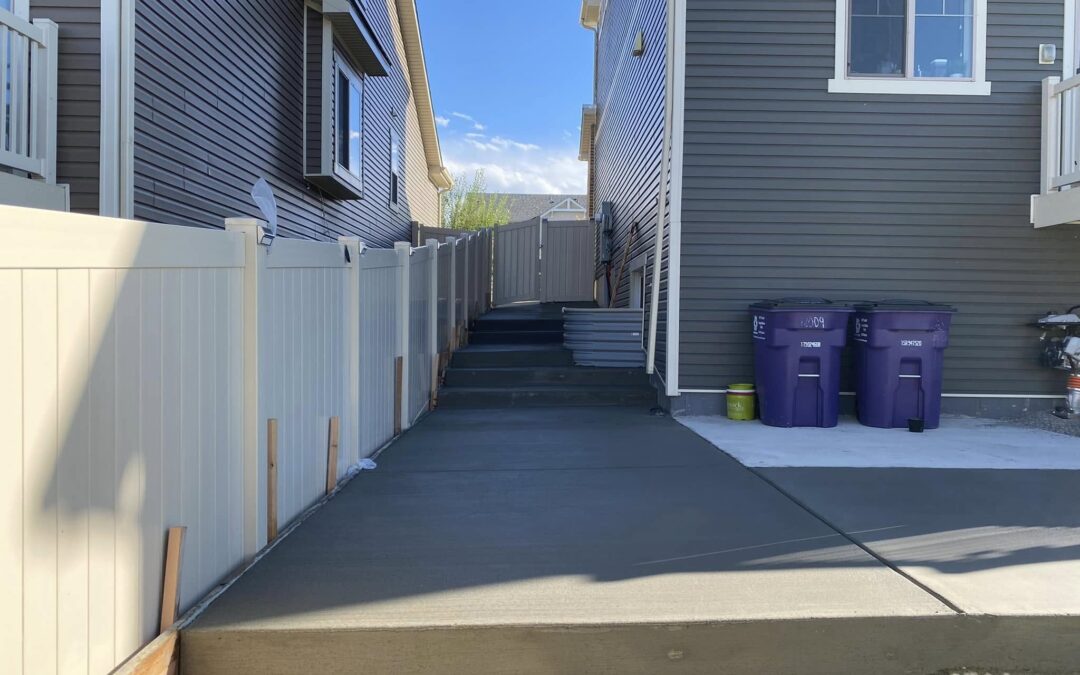
How to Prepare Your Yard for a New Concrete Driveway
Getting a new concrete driveway is one of the smartest investments you can make in your home. But the pour itself is only part of the job. What happens before the truck rolls up — the prep work — is what separates a driveway that lasts 30 years from one that cracks, heaves, and drains toward your garage.
If you’re planning a new driveway in Colorado, here’s what you need to know before the concrete crew shows up.
Step 1: Mark Your Utilities
Before any digging starts, call 811 — Colorado’s free utility locating service. They’ll mark underground gas, water, electric, and telecom lines within a few days. This isn’t optional. Hitting a line during excavation can mean expensive repairs and serious safety risks. A good concrete contractor will expect this to be done before they break ground, but it’s ultimately the homeowner’s responsibility to initiate the call.
Give yourself at least 3 business days before the scheduled work. In busy seasons (spring and summer), the marking crews get slammed, so call early.
Step 2: Clear the Area
Remove everything in the driveway footprint — old asphalt, loose gravel, sod, shrubs, and any debris. If you have an existing concrete driveway, your contractor will handle demo and haul-away, but confirm this upfront. Some crews include it in the bid; others charge separately.
Trim back any tree roots near the driveway path. Tree roots are one of the top causes of concrete cracking in Colorado neighborhoods — they grow under slabs and push them up over time. If there’s a mature tree close to your planned driveway, discuss root barriers with your contractor before pouring.
Step 3: Grade the Subgrade
This is the big one. The soil beneath your driveway — called the subgrade — needs to be properly graded to:
- Slope away from your house (typically 1–2% grade toward the street)
- Be compacted evenly so the slab doesn’t settle unevenly
- Be free of soft spots, organic material, and debris
In Colorado, we deal with expansive clay soils in many areas — particularly along the Front Range. Expansive clay swells when it gets wet and shrinks when it dries out. If your contractor isn’t accounting for this in the subgrade prep, you’re going to see cracking within a few years. Ask them specifically how they handle expansive soils in your area.
Step 4: Sort Out Drainage Before the Pour
Bad drainage is the silent killer of concrete driveways. If water pools on or around your driveway, it will eventually find its way under the slab and cause problems — especially through Colorado’s freeze-thaw cycles.
Walk your yard after a rainstorm and watch where water collects. If there are low spots near the driveway area, those need to be addressed in grading. You may also want to consider:
- A channel drain or trench drain at the base of the driveway to catch runoff
- French drains along the sides to move water away
- Adjusting downspout routing so roof water doesn’t flow toward the slab
Step 5: Plan Your Access During and After the Pour
Concrete needs 24–48 hours before foot traffic and 7–10 days before vehicle traffic (longer in cold weather). Think through your logistics:
- Where will you park during the cure period?
- Is there a side gate or back yard access for deliveries?
- Do you have pets that need to stay off the fresh slab?
Talk through timing with your contractor. Most experienced crews in the Denver metro will work with you on scheduling to minimize inconvenience.
What Your Contractor Should Be Doing
A professional concrete contractor won’t just show up and pour. Before the concrete truck arrives, they should:
- Set forms to define the driveway shape and edges
- Install a gravel base (typically 4–6 inches of compacted road base)
- Lay wire mesh or rebar for reinforcement
- Confirm slope and drainage plan
If a crew skips the gravel base or reinforcement to save time, that’s a red flag. In Colorado’s climate, those aren’t optional — they’re what keeps your driveway intact through years of freeze-thaw cycles.
JXB Concrete handles full driveway prep and installation across the Front Range, including Aurora, Thornton, and Northglenn. We don’t cut corners on subgrade prep — because we know that’s where driveways succeed or fail.
Ready for a free quote? Contact JXB Concrete — serving Denver, Aurora, Thornton, Northglenn, and communities across the Front Range.