
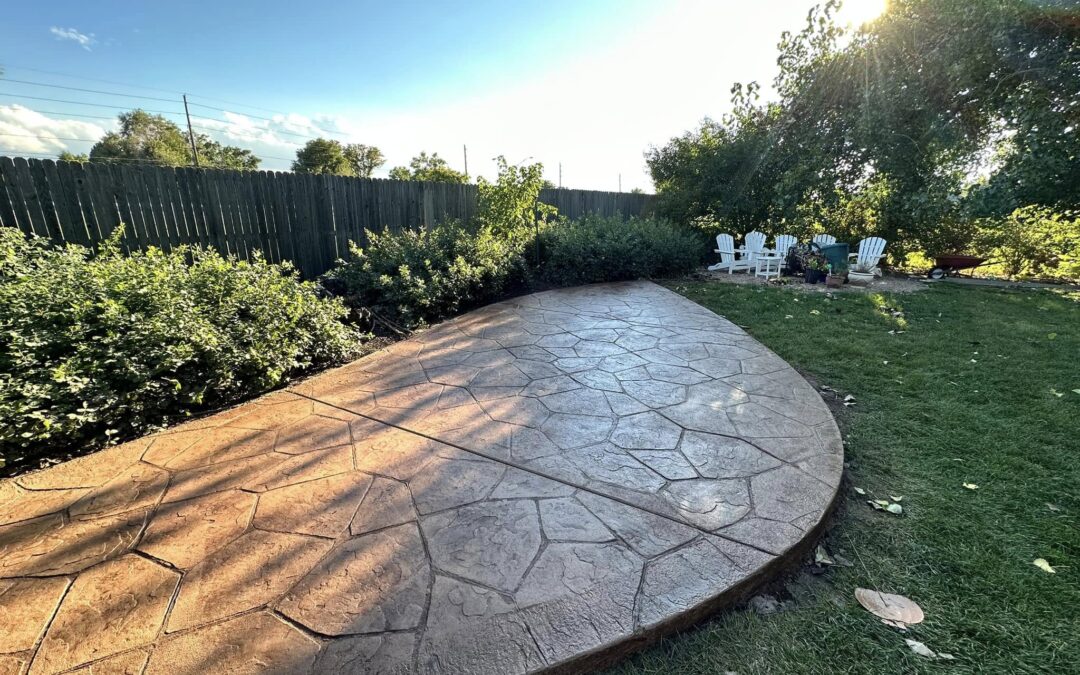
The Ultimate Guide to Stamped Concrete in Colorado
Stamped concrete has become one of the most popular exterior surface choices for Colorado homeowners — and for good reason. It delivers high-end aesthetics at a fraction of the cost of natural stone, it’s durable when properly installed, and it can be customized to complement virtually any home style. This guide covers everything you need to know before making a decision.
What Is Stamped Concrete?
Stamped concrete is regular concrete that’s been textured and patterned using rubber stamp mats pressed into the surface while the concrete is still in a plastic (workable) state. Color pigments are either mixed throughout the concrete (integral color) or broadcast onto the surface (color hardener). A release agent prevents stamps from sticking and often adds a secondary color for depth.
The result mimics the look of slate, flagstone, cobblestone, brick, wood planks, and other materials — at a cost that’s typically 50–70% less than the natural materials themselves.
Popular Stamped Concrete Patterns in Colorado
- Ashlar slate: Clean geometric cuts, modern and versatile. Works for contemporary homes, patios, pool decks.
- Random flagstone: Organic, irregular shapes that complement natural landscaping. Popular in Boulder and mountain-adjacent communities.
- Cobblestone: Old-world charm. Popular for driveways and front walkways in traditional-style homes.
- Herringbone brick: Classic, structured look. Popular for patios and outdoor kitchen areas.
- Wood plank: Rustic warmth for fire pit areas, decks, and covered patios.
- Running bond: Modern horizontal lines. Minimal, clean, pairs well with contemporary architecture.
Color Options
Colorado’s earth-tone palette lends itself naturally to warm stamped concrete colors. Popular choices include:
- Sandstone and buff tones
- Terra cotta and adobe red
- Slate gray and charcoal
- Chocolate and walnut brown
- Flagstone tan with slate accent release
Two-tone combinations — a base color plus contrasting release agent — create more depth and a more convincing natural stone appearance. Single-color applications tend to look flat by comparison.
Cost of Stamped Concrete in Colorado
Stamped concrete runs $12–$20 per square foot installed for most residential projects in Denver and surrounding areas. More complex patterns, multi-tone color work, or small projects with high setup costs can push toward $25/sq ft.
For comparison:
- Plain concrete: $6–$8/sq ft
- Stamped concrete: $12–$20/sq ft
- Natural flagstone: $20–$40/sq ft
- Concrete pavers: $15–$30/sq ft
How Stamped Concrete Performs in Colorado Winters
This is the most important question for Front Range homeowners. The honest answer: stamped concrete performs well in Colorado winters if installed correctly and maintained with regular sealing.
Critical requirements for Colorado stamped concrete:
- Air-entrained mix: Microscopic air voids absorb freeze-thaw expansion pressure. Non-negotiable in Colorado.
- 4,000 PSI minimum mix: Higher strength concrete is denser and less porous, reducing water infiltration.
- Proper sealing: Annual or biennial sealing with a penetrating or film-forming sealer is essential. Unsealed stamped concrete deteriorates rapidly in freeze-thaw conditions.
- Avoid calcium/magnesium chloride deicers: These accelerate surface deterioration. Use sand for traction instead.
Properly installed and maintained stamped concrete in Boulder and Fort Collins regularly lasts 20–30 years without major issues. Projects that fail early almost always had installation or maintenance shortcomings.
Maintenance Schedule
- Year 1: No deicers. Seal at 30 days post-installation if not already done by contractor.
- Every 1–3 years: Reseal with compatible product. More frequently in high-sun or high-traffic areas.
- As needed: Fill small cracks with color-matched caulk before they allow water infiltration.
- Every 5–7 years: Consider a deeper reseal or color refresh if fading is significant.
Choosing a Stamped Concrete Contractor
Stamped concrete is more skill-intensive than plain concrete. Timing is critical — stamps need to be pressed at the right stage of the cure process, and a crew that’s too slow or too fast will produce poor results. Ask to see portfolio photos of actual completed projects, not just stock images. Ask how long they’ve been doing decorative work specifically.
Contractors serving Loveland and the surrounding region should have local climate experience — if they’ve been doing decorative concrete in Colorado for years, they’ll know the mix adjustments and seasonal timing that the work demands.
Ready for a free quote? Contact JXB Concrete — serving Denver, Boulder, Fort Collins, Loveland, and communities across Colorado.